
Last updated: August 2026
Key Takeaways
- A newborn needs a near-flat (lie-flat) position because they can't hold up their head, and slumping can compress the airway.
- A stroller is "newborn-safe" when it offers a lie-flat mode via bassinet, full recline, or an infant insert, plus a 5-point harness and reliable brakes.
- You don't always need a separate stroller: many seats become newborn-ready with an infant insert or a click-in infant car seat adapter.
- Look for independent safety certification (JPMA, now the Baby Safety Alliance) in addition to mandatory CPSC compliance.
- Newborn safety doesn't require the most expensive stroller: certified, lie-flat-capable options like Mockingbird start at $475 (as of 2026), well below the $800 to $900 premium models.
A newborn-safe stroller is one that lets your baby lie flat or nearly flat through a bassinet, a fully reclining seat, or an infant insert, while a 5-point harness and dependable brakes keep them secure. Because newborns can't support their own heads, that flat position protects their airway during your first outings.
This guide walks you through the safety features that actually matter when choosing a stroller for a newborn, how to tell if a stroller is newborn-ready out of the box or needs an accessory, and what certifications signal the stroller has been tested beyond the legal minimum. We'll also cover whether you really need to spend $900 on a premium brand to get a safe stroller (spoiler: you don't).
Stroller shopping while pregnant can feel overwhelming. There are dozens of models, conflicting advice, and a lot of marketing language that blurs the line between nice-to-have features and actual safety essentials. We're here to cut through that noise and give you a practical framework for evaluating any stroller you're considering.
Why Do Newborns Need a Lie-Flat Stroller Position?
Newborns need to ride lying flat because their neck muscles can't yet hold their head upright. An upright or slumped position can bend the chin toward the chest and restrict breathing. A lie-flat or near-flat stroller position keeps the spine and airway open until your baby develops stronger head control.
According to the CDC's milestone guidance, most babies can hold their head steady without support by around 4 months. Until that milestone, your baby relies on the stroller to keep their airway aligned. This is why a flat or near-flat recline is considered the safest position for newborn strolling.
There's a key difference between a true lie-flat bassinet or carrycot and a deep-recline stroller seat. A bassinet provides a completely horizontal surface, similar to a crib. A deep recline tilts the seat back far enough that your baby's head won't fall forward, but it's not perfectly flat. Both can work for newborns when used correctly, though a bassinet gives you the most margin of safety for airway positioning.
What About Infant Car Seats on Stroller Frames?
Infant car seats are designed to keep your baby safe in a vehicle, not for extended use outside the car. When you click an infant car seat onto a stroller frame, your newborn is in an upright, semi-reclined position. That's fine for shorter outings, but it's important to limit continuous time in an upright infant car seat and move your newborn to a flat surface for longer periods.
The American Academy of Pediatrics advises that babies who fall asleep in a car seat, stroller, swing, or carrier should be moved to a firm, flat sleep surface as soon as possible. According to the AAP via HealthyChildren.org, sitting devices like car seats and strollers are not recommended for routine sleep, especially for infants younger than 4 months. The AAP also notes that any surface inclined more than 10 degrees isn't safe for infant sleep.
Important: If your baby falls asleep during a stroll, that's normal. But plan for longer outings with a flat bassinet option or take breaks to lay your baby flat when you reach your destination.
What Safety Features Actually Matter in a Newborn Stroller?
The features that make a stroller safe for a newborn are a lie-flat or deep-recline mode (also called carriage mode), a secure 5-point harness, a stable wide wheelbase, and easy-to-engage brakes. Independent certification, such as JPMA (now the Baby Safety Alliance), signals the stroller was tested beyond the minimum legal requirements.
Let's break down each of these features so you know exactly what to look for.
Lie-Flat or Deep-Recline Seat
A lie-flat or deep-recline seat is the non-negotiable feature for newborn safety. Whether the stroller has a true bassinet attachment or a seat that reclines to near-flat, your baby needs to lie with their head, neck, and spine aligned. When you're evaluating a stroller, recline the seat all the way back and check whether a newborn's head would fall forward. If it would, that stroller isn't newborn-safe on its own.
5-Point Harness
A 5-point harness secures your baby at both shoulders, both hips, and between the legs. This distributes restraint across the body and keeps your newborn centered in the seat or bassinet. Look for a no-rethread, magnetic-buckle 5-point harness that adjusts easily, since you'll tighten it over puffy jackets and loosen it as your baby grows.
Stability and Brakes
A wide wheelbase keeps the stroller from tipping, even on uneven terrain or when you hang a diaper bag on the handles. Locking brakes should engage firmly with one step on the brake lever. Test them yourself: the stroller shouldn't roll at all when the brakes are on.
Pro Tip: In the store or at home, push down on the handlebar with moderate pressure. A stable stroller won't tip backward easily.
Certification and Safety Standards
Every stroller sold in the US must meet the CPSC's mandatory federal safety standard (16 CFR Part 1227, which incorporates ASTM F833). This standard covers brakes, restraint systems, stability and tip-over prevention, and entrapment hazards. Meeting this standard is the legal minimum, not a badge of excellence.
For additional assurance, look for strollers independently certified by JPMA, now the Baby Safety Alliance (the organization rebranded in June 2025). The Baby Safety Alliance's Verification Program tests products to federal, state, and voluntary safety standards, going beyond the legal baseline. When you see the JPMA (Baby Safety Alliance) seal, you know the stroller was tested by an independent lab, not just the manufacturer's own team.
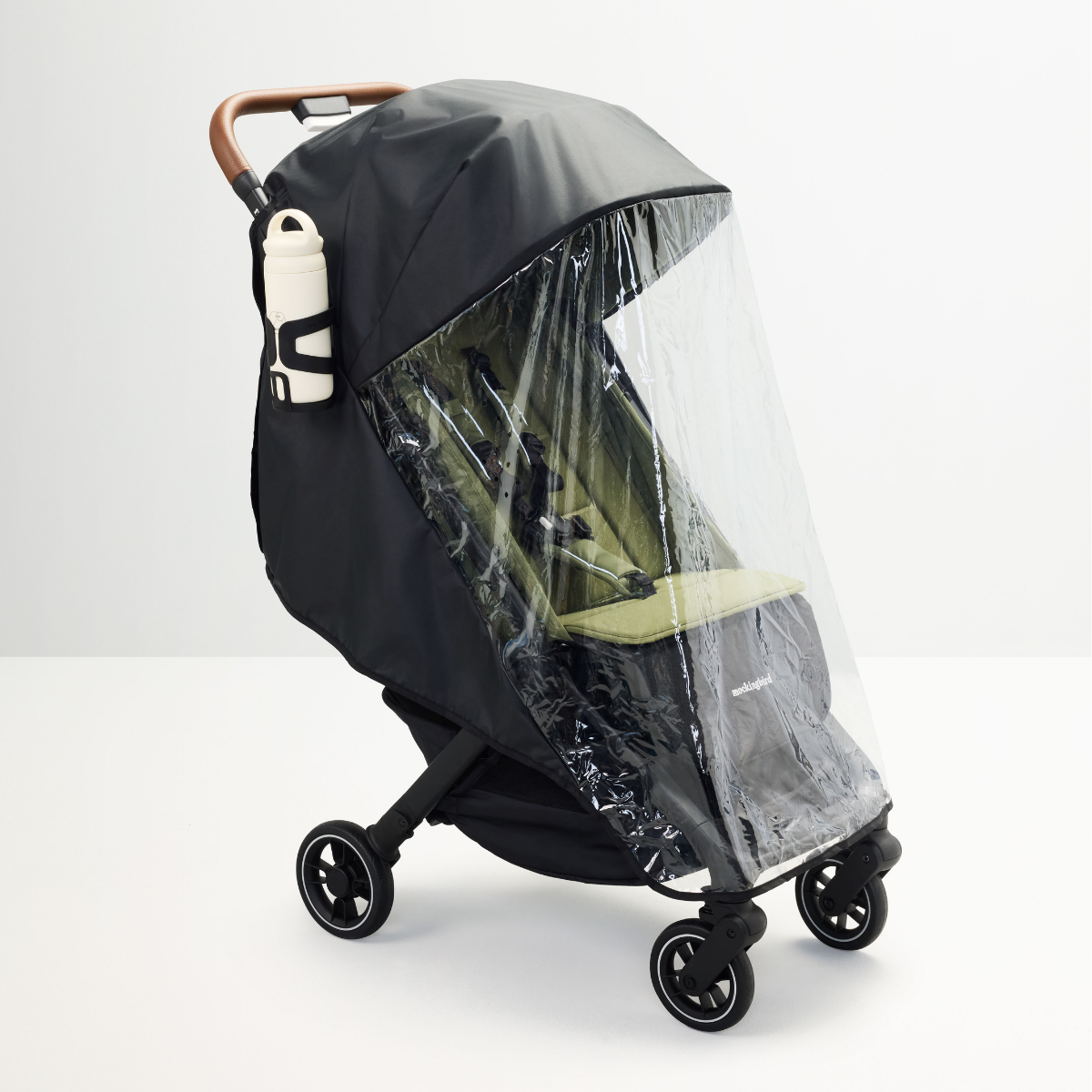
Mockingbird strollers are independently certified by JPMA (now the Baby Safety Alliance) and meet CPSC and ASTM F833-21. That's not marketing language; it's third-party verification.
Fabrics and Materials
While not a primary safety feature, some parents care about low-emission fabrics and certifications like GREENGUARD Gold, which limits chemical emissions. These are worth considering if you're sensitive to VOCs or plan to use the stroller indoors frequently, but they're secondary to the structural safety features above.
How Do You Make a Stroller Newborn-Ready? Bassinet vs. Infant Insert vs. Car Seat Adapter
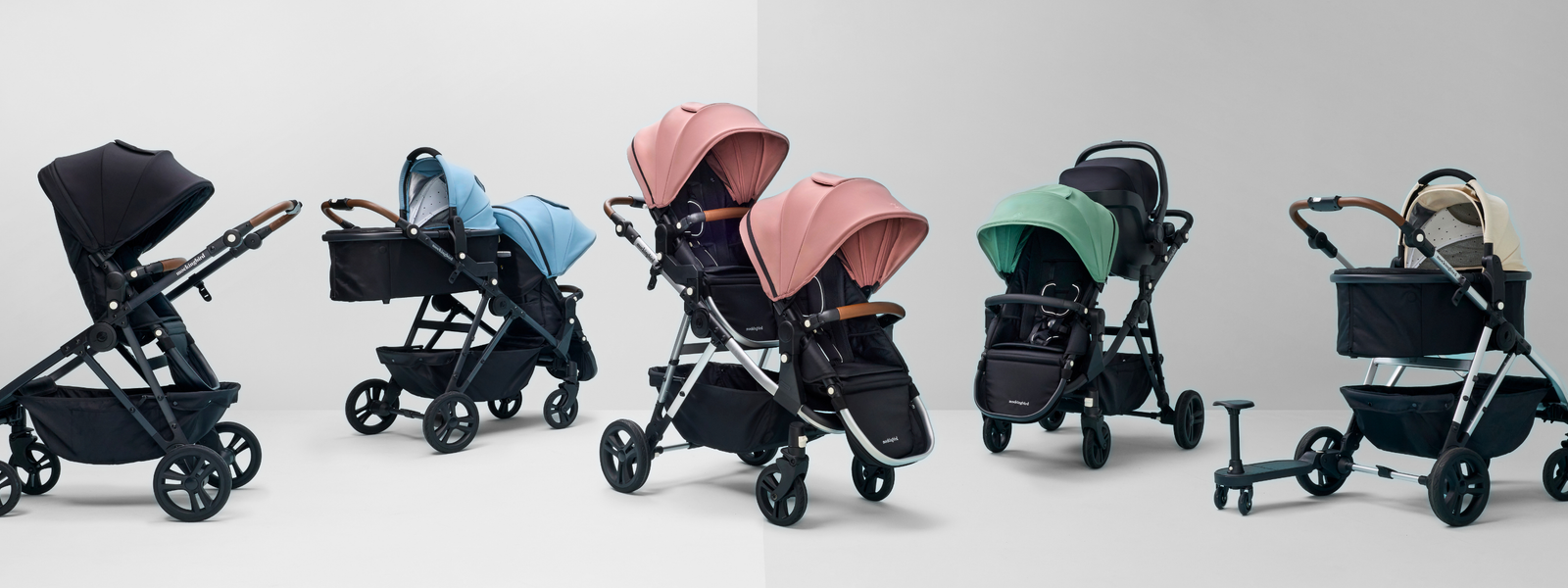
Most strollers become newborn-ready in one of three ways: a bassinet or carrycot that provides a flat sleep surface, an infant insert that adds head-and-body support to the regular seat, or a car seat adapter that clicks an infant car seat onto the frame. Each is safe when used exactly as the manufacturer specifies.
The right choice depends on your budget, how you plan to use the stroller, and whether you want the bassinet to double as a sleep surface at home.
Bassinet or Carrycot
A bassinet attachment provides a true flat surface for your newborn. Some bassinets are approved for overnight sleep when used with a certified stand, making them a two-in-one option for families with limited space. A lie-flat bassinet stroller is especially helpful for longer outings, walks, or parents who want their baby to nap on the go without time restrictions.
Mockingbird's stroller-to-sleep bassinet is designed for both strolling and at-home sleep routines, giving you flexibility without buying a separate sleep space.
Infant Seat Insert
An infant insert adds head and body support to an existing stroller seat, turning a reclining seat into a newborn-safe cocoon. This is often the most budget-friendly path to making a stroller newborn-ready since it works with the seat you already have. Just make sure the seat reclines far enough that your baby's head stays aligned.
Mockingbird's infant seat insert is $45 (as of 2026) and fits the Single Stroller and Single-to-Double Stroller 3.0, making either stroller safe from birth without a separate bassinet purchase.
Infant Car Seat Adapter (Travel System)
A car seat adapter lets you click your infant car seat directly onto the stroller frame. This is convenient for quick trips from car to stroller without moving a sleeping baby. However, remember that the infant car seat position is more upright than a flat bassinet, so limit continuous time in the car seat and move your newborn to a flat surface for longer outings or sleep.
Mockingbird's infant car seat adapter is $50 (as of 2026) and works with 40+ infant car seat models, so you can build a travel system with the car seat you already own.
Which Should You Choose?
- Bassinet if you want maximum flexibility for long outings and the option for overnight sleep at home.
- Infant insert if you're on a budget and your stroller seat reclines to near-flat.
- Car seat adapter if you prioritize car-to-stroller convenience and take shorter trips.
Many parents start with either the infant insert or bassinet, and add on a car seat adapter if they're going to be in and out of the car often.
Do You Need a Premium Stroller for Newborn Safety?
No. A higher price tag doesn't automatically mean a safer newborn stroller. Safety comes from the lie-flat position, harness, stability, and independent certification, all of which are available on strollers that cost far less than the $800 to $900 premium models that dominate "best of" lists.
Here is how Mockingbird compares with two premium newborn-safe strollers that top current "best of" lists (prices from The Bump's tested roundup, updated July 2026):
| Stroller | Price | Newborn lie-flat method |
|---|---|---|
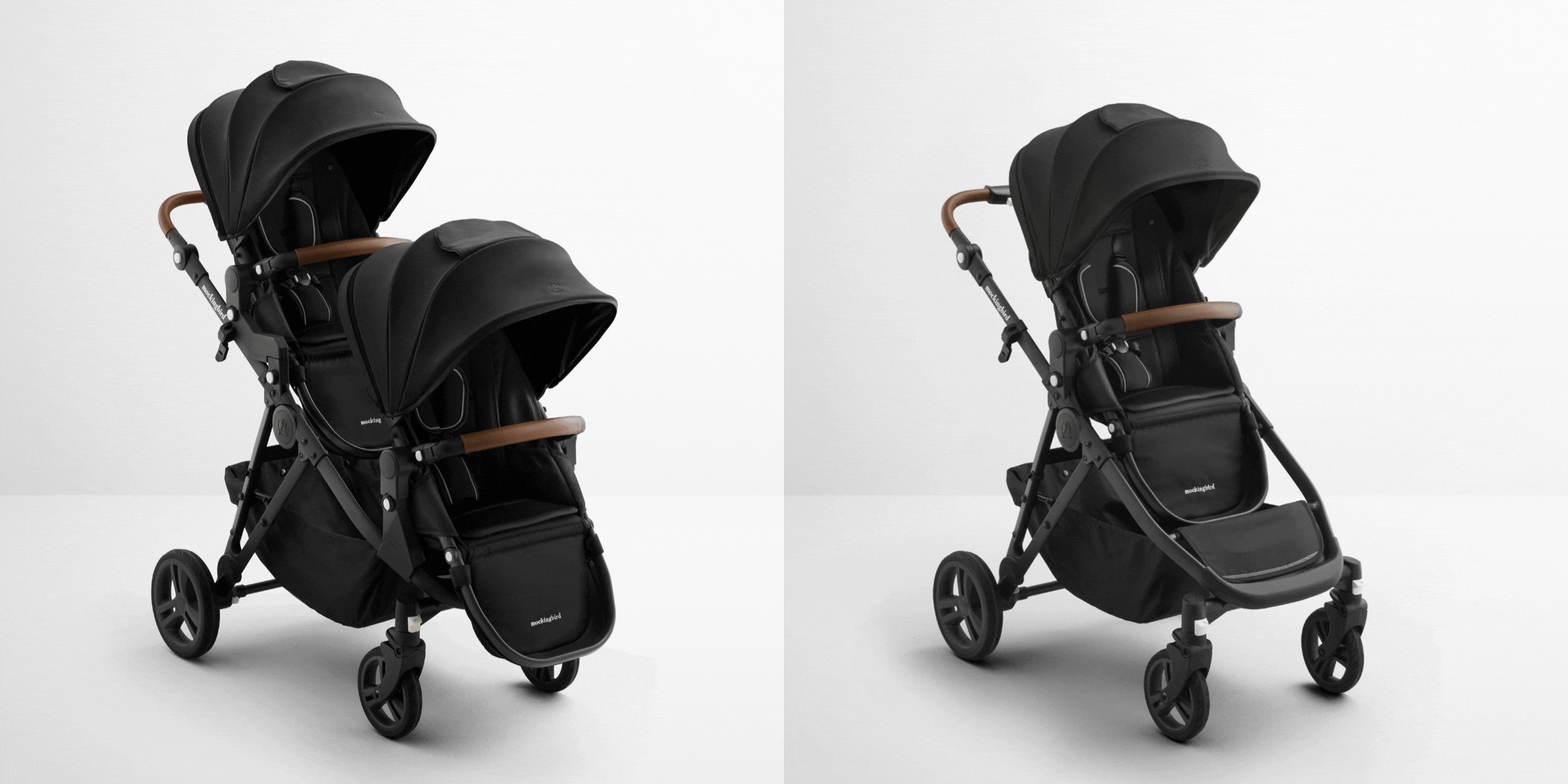
| Mockingbird Single-to-Double 3.0 | $549 | Bassinet, infant insert, or car seat adapter |
| UPPAbaby Cruz V3 | $899.99 | Carriage mode with included infant insert |
| Nuna MIXX Next | $900 | Lie-flat recline or bassinet |
All three clear the same safety bar covered above: a lie-flat position, a secure 5-point harness, stable brakes, and independent certification such as JPMA (now the Baby Safety Alliance). Mockingbird's Single-to-Double 3.0 meets that bar at $549, roughly $350 less than the UPPAbaby Cruz V3 and Nuna MIXX Next. Luxury options like the Bugaboo Fox 5 cost considerably more without adding to that core safety bar.
Premium strollers often justify their prices with luxury materials, designer collaborations, or tech features like powered folding. Those features can be nice, but they're not what keeps your newborn safe.
What to Prioritize on a Budget
Focus your budget on the safety essentials: lie-flat capability, a secure 5-point harness, stable brakes, and independent certification (Baby Safety Alliance or equivalent). Once you've confirmed those boxes are checked, you can evaluate extras like one-handed fold, reversible seats, or all-terrain wheels based on your lifestyle.
Longevity and Warranty as Value
A stroller that lasts through multiple children, or grows with your family from single to double configuration, offers long-term value that offsets a higher upfront cost. A lifetime warranty signals the manufacturer stands behind their product for years, not just until the return window closes.
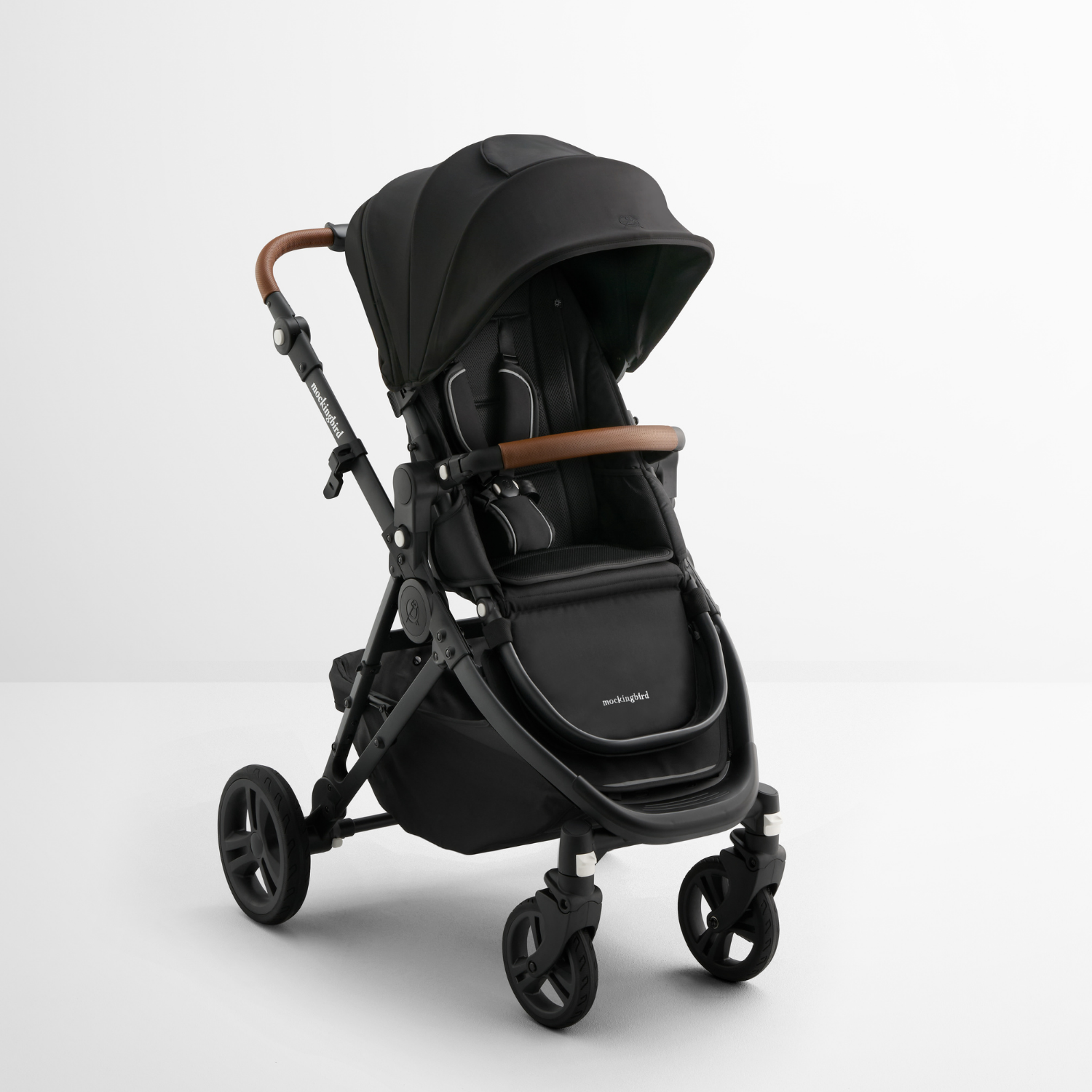
Mockingbird strollers start at $475 (as of 2026) with a lifetime warranty and the same core safety credentials as premium competitors: lie-flat capability, 5-point harness, and Baby Safety Alliance certification. The Single-to-Double Stroller 3.0 was named "Best full-size stroller for growing families" by The Bump (2026), and Mommyhood101 ranked the Mockingbird 3.0 as their #1 "Best All-Around" stroller in 2026.
You don't need to spend $900 or more to get a newborn-safe stroller. You need to know what features matter and verify the stroller meets those standards.
What Should Be on Your Newborn Stroller Safety Checklist?
Before buying, confirm the stroller reclines flat enough that your newborn's head won't fall forward, has a working 5-point harness, locks securely with its brakes, and states its safety certification. If it isn't newborn-ready on its own, check exactly which insert, bassinet, or adapter you'll need.
Use this checklist when you're evaluating strollers in the store or at home:
- Lie-flat or recline check: Recline the seat fully. Place your hand where a newborn's head would rest. Does it stay level, or would a baby's head roll forward?
- Harness test: Fasten and adjust the 5-point harness. Does it tighten snugly across all five points? Does it release easily when you need to remove your baby?
- Brakes and stability: Engage the brakes and try to push the stroller. It should not roll. Press down on the handlebar; the stroller should not tip backward easily.
- Certification verification: Check the product listing, packaging, or manufacturer's website for CPSC compliance and Baby Safety Alliance (or equivalent) certification.
- Newborn-ready path: Is the stroller newborn-safe out of the box, or do you need an infant insert, bassinet, or car seat adapter? Which specific accessory is compatible?
- Weight, fold, and fit: Can you lift and fold the stroller easily? Will it fit in your car trunk with groceries?
Pro Tip: Not sure if a stroller fits your life? Mockingbird's Try at Home for 30 Days program lets you test drive your stroller at home, so you can run this checklist in your actual daily routine before you commit.
Frequently Asked Questions
Are lie-flat strollers safe for newborns?
Yes, a lie-flat position is considered the safest for newborns because it keeps the airway aligned before a baby can hold up their own head, typically around 4 months old.
Can a newborn sleep in a stroller bassinet?
Only if the manufacturer specifically approves the bassinet for sleep and you use it flat on an approved stand or frame; a reclined stroller seat or infant car seat is not a safe sleep surface.
Is a newborn stroller safe out of the box, or do I need accessories?
It depends on the model: some stroller seats recline flat for newborns, while others require an infant insert, bassinet attachment, or infant car seat adapter to be newborn-safe.
What safety certification should a newborn stroller have?
Look for mandatory CPSC compliance (required by law) plus independent certification such as Baby Safety Alliance (formerly JPMA), which signals testing beyond the federal minimum.
How long can a newborn stay in a stroller car seat?
Limit continuous time in an upright infant car seat and move your newborn to a flat surface for longer outings or sleep, since car seats position babies in a semi-reclined posture not ideal for extended use.
How Do You Choose a Newborn-Safe Stroller With Confidence?
A newborn-safe stroller doesn't have to cost a fortune or come from the trendiest brand. It needs to do four things well: keep your baby lying flat, secure them with a proper harness, stay stable under real-world use, and meet safety standards verified by an independent lab.
Start with those criteria, and you'll cut through the noise of stroller marketing. From there, you can choose the features that fit your life, whether that's a single-to-double configuration, a bassinet for longer walks, or a car seat adapter for quick errands.
Strolling with a newborn is still a learning curve. Packing the diaper bag, timing outings around feeds and naps, wrestling the stroller into your trunk for the first time: none of that gets magically easy because you bought the right gear. But having a stroller you trust is one less thing to worry about while you figure out the rest.
Explore Mockingbird's newborn-ready strollers, including the Single Stroller and Single-to-Double Stroller 3.0, or check out our guide to strolling safely with an infant for more tips on those first outings.